Guida all'acquistoAggiornato 1 nov 2026
Can you drive an electric car through flood water? (2026)
Questa pagina è in inglese.
CRAVEUO EV Export · Sources last checked 2026-11-01 · General information. In an emergency, follow your local emergency services. Nothing here is a promise or a quote.
Quick answer
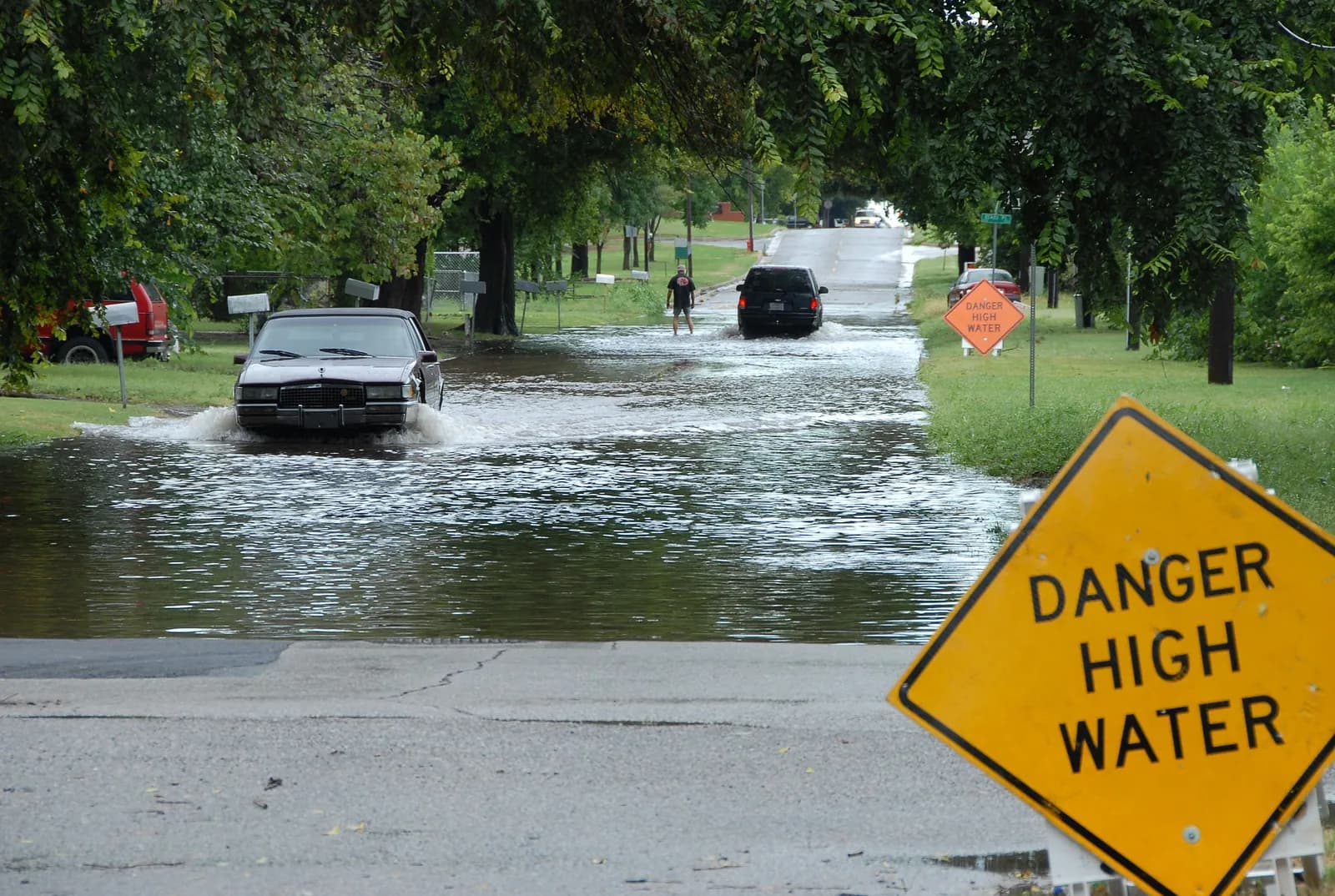
Don't drive an electric car through flood water if you can avoid it. Moving water can float any car at about 30 cm, and an EV is no exception. Rain and ordinary puddles are not a problem. If your EV has been sitting in flood water, do not drive it or charge it. Keep it about 15 metres from buildings and other vehicles, tell the tow operator it is electric, and have it checked. Fire can come days or weeks later, especially after salt water.
Rain and puddles
Heavy rain is normal use. Australia's EV FireSafe says it is safe to drive through heavy rain and puddles, and NRMA says charging in the rain is safe with the supplied or a certified charger. NRMA also says to avoid extension leads and household plugs in wet weather. BYD asks owners to find a sheltered place (printed p. 100) to charge in rainy weather. Follow your manual.
Flood water
The first risk is the water, for any car:
- The UK Environment Agency says 30 cm of flowing water can float a car.
- NRMA says even shallow water can be risky if it flows faster than 7 km/h.
- You can't see the road under the water.
Then there is the car. BYD's Atto 3 manual (printed p. 100) says water in high-voltage parts may not fully dry out, weakens insulation and raises the risk of a short circuit. It also says damage from submersion is not covered by the warranty.
If there is no other way through
Check whether the water is passable first. If you don't know the depth, or it is moving, turn back. BYD's limits for the Atto 3:
- Water must not go above the vehicle's lower edge (printed p. 99).
- Do not drive where it is deeper than half the tyre height (printed p. 100).
- Turn off the air conditioning, and keep a slow, steady speed.
- Do not stop, reverse or switch off in the water.
- Afterwards, press the brake several times to dry the discs, and avoid hard braking.
Other cars have other limits. The manual does not give a water depth in centimetres, so "half the tyre height" is the practical figure for this car. BYD says that if the car is waterlogged or the water went above the door sill (printed p. 100), contact an authorised dealer or service provider.
If your EV has been flooded
- Stay out of the water, and get people clear. Your safety comes before the car.
- Call emergency services if you see danger. NSW Fire and Rescue says that if a submerged EV looks damaged, smokes or shows gas bubbles, call emergency services and say it is electric. EV FireSafe says bubbles may indicate thermal runaway and toxic gas. Move away.
- Do not drive or charge it. EV FireSafe's flood poster says do not attempt to drive or charge an EV that has been submerged. NRMA gives the same advice on charging after recovery.
- Keep it away from anything that can burn. The US safety agency NHTSA says not to park a damaged lithium-ion vehicle in a garage or within 50 feet of a house, another vehicle or combustibles. NSW advice says 15 metres.
- Tell the tow operator it is electric, and that it was flooded. See our towing guide.
- Call your insurer and a qualified workshop. Take photos of the water line. The workshop should inspect the high-voltage system before anyone uses the car.
A submerged EV does not electrify the surrounding water, according to EV FireSafe. Even so, don't touch it, because damaged high-voltage parts may not be visible.
Why salt water is worse
After Hurricane Ian in 2022, NHTSA pointed to salt water as the main factor behind flooded EV fires in Florida, as reported. It also said battery fires had been seen igniting several weeks after the damage. A later teardown study of 10 hurricane-damaged EVs found widespread corrosion where the water was salty or brackish.
EV FireSafe says water entry is mainly a concern after prolonged submersion, typically hours to days, especially in salt water. It adds that a fire can come weeks or months later. Do not treat a car as safe just because it looks dry.
Signs of battery fire include popping, hissing, large vapour clouds and jet-like flames. Move away and call emergency services.
Buying a used EV after a flood season
BYD's schedule includes a check for wading marks on high-voltage parts (printed p. 159). Ask a workshop to do the same on any used EV from a flood area, and look for silt under carpets and in the seat rails.
Domande frequenti
Can an EV electrocute you in water?
Are EVs safer in water than petrol cars?
Is flood damage covered by the warranty?
My car went through water and seems fine. What now?
How long should I watch a flooded EV?
Vuoi che una di queste auto venga spedita nel tuo paese?
Indicaci il tuo paese e la versione; rispondiamo entro un giorno lavorativo con un prezzo indicativo FOB e il percorso di esportazione.
Sources (checked 2026-11-01)
- NHTSA: hurricane and flood-damaged vehicles, read through a search index because the site refused automated requests
- NHTSA-hosted paper: teardown of flood-damaged EVs, read through a search index for the same reason
- ABC7 on NHTSA's letter to Florida, press, 2022-10-21
- UK Government and Environment Agency: flood water warning, 2019-12-19
- EV FireSafe: EV flood guidance
- EV FireSafe: flood poster, read through a search index
- NRMA: electric cars in floods and water, includes NSW Fire and Rescue advice
- BYD: Atto 3 owner's manual, English edition; printed page numbers
Questa guida non è una consulenza legale o doganale; decidono la dogana del paese di destinazione e uno spedizioniere doganale autorizzato.