
KaufratgeberAktualisiert 30. Okt. 2026
How to import a Chinese electric car into Chile (2026)
Diese Seite ist auf Englisch.
CRAVEUO EV Export · Sources last checked 2026-10-30 · General information, not legal advice. We do not clear customs in Chile. Nothing here is a promise or a quote.
Quick answer
Chile takes new cars only. Used cars are banned by Article 21 of Law 18.483, with no exception for electric cars. The only exceptions are the few classes that article lists. Under the China FTA, duty is 0% if you hold a certificate of origin, the car reaches 40% regional value content and it travels direct; otherwise duty is 6%. IVA is 19%, and battery-electric cars are exempt from the green tax.
Key facts
New or used
New only (Law 18.483, Art. 21)
Customs duty
0% under the China FTA, with conditions below. Otherwise 6% of CIF value (Aduanas)
IVA
19% on CIF value plus duty (DL 825, Art. 16)
Green tax
Battery-electric cars exempt (Law 20.780, Art. 3). Petrol and diesel cars pay once. Hybrids: see below
Luxury tax at import
None. The old tax in Article 46 is repealed (DL 825). Aduanas lists only the 6% and the 19% (Aduanas)
Yearly luxury tax
2% of market value on cars worth 62 UTA or more. This is an ownership tax, not an import cost, and the article has no electric-car exemption (Law 21.420, Art. 9). Peso threshold for 2026: not found
Circulation permit
Reduced until 2030, by our count, for electric cars and plug-in hybrids made in 2021 or later. See below
Who may import
Chileans and foreigners may import a new car (Aduanas traveller FAQ, Q17). A customs broker is required (Aduanas, general rule)
Homologation
A CHI-e certificate for every car (DS 160, Art. 1, ChileAtiende 7)
Steering
Left-hand drive. A right-hand-drive car may not use public roads unless the steering is moved (Aduanas Res. 2902/2011)
Charging
Regulation lists four DC plugs. In practice the public network is CCS2. See below
| Item | Detail |
|---|---|
| New or used | New only (Law 18.483, Art. 21) |
| Customs duty | 0% under the China FTA, with conditions below. Otherwise 6% of CIF value (Aduanas) |
| IVA | 19% on CIF value plus duty (DL 825, Art. 16) |
| Green tax | Battery-electric cars exempt (Law 20.780, Art. 3). Petrol and diesel cars pay once. Hybrids: see below |
| Luxury tax at import | None. The old tax in Article 46 is repealed (DL 825). Aduanas lists only the 6% and the 19% (Aduanas) |
| Yearly luxury tax | 2% of market value on cars worth 62 UTA or more. This is an ownership tax, not an import cost, and the article has no electric-car exemption (Law 21.420, Art. 9). Peso threshold for 2026: not found |
| Circulation permit | Reduced until 2030, by our count, for electric cars and plug-in hybrids made in 2021 or later. See below |
| Who may import | Chileans and foreigners may import a new car (Aduanas traveller FAQ, Q17). A customs broker is required (Aduanas, general rule) |
| Homologation | A CHI-e certificate for every car (DS 160, Art. 1, ChileAtiende 7) |
| Steering | Left-hand drive. A right-hand-drive car may not use public roads unless the steering is moved (Aduanas Res. 2902/2011) |
| Charging | Regulation lists four DC plugs. In practice the public network is CCS2. See below |
New cars only
The law says: "sólo podrán importarse vehículos sin uso" (Law 18.483, Art. 21). The article lists these exceptions:
- Special-purpose vehicles such as ambulances, hearses, fire engines and motorhomes, used for something other than ordinary transport.
- Vehicles under the special customs regimes of Section 0 of the tariff, and vehicles with a full or partial duty exemption.
- Used trolleybuses with more than 18 seats. This is the only place the article mentions electric traction.
- Antique vehicles of 50 years or more, under Title XIX of Law 18.290.
Aduanas also describes two personal routes that allow a used car. Chilean adults returning for good after at least 18 months abroad may import one car and pay full tax, through a broker (Aduanas, 2022). People with a disability may use Law 20.422, with a COMPIN resolution (Aduanas). Neither is open to an ordinary buyer.
Article 21 does not mention free zones. We found no rule that lets an ordinary buyer bring a used car from a free zone into the rest of Chile.
What counts as new
Aduanas gives two tests (Q16).
- Model year. When the import declaration is accepted, the car must be a model of that year or the next. A model of the year before qualifies only if the declaration is accepted by 30 April of the following year.
- Distance. Zero kilometres, or only the distance needed to move the car from the foreign seller to the destination port in Chile.
By our reading, a declaration accepted in late 2026 needs a 2026 or 2027 model. A 2025 model stopped qualifying after 30 April 2026. A car already registered in China and exported as "zero-kilometre used" risks being treated as used. That last point is our inference; the Aduanas text does not mention China registration.
Duty under the China FTA
Chile's tariff schedule lists every line of heading 87.03 at a base rate of 6%, category "Year 1". Annex 1 defines that as duty-free from the day the agreement entered into force. The schedule uses older codes, from before the electric subheadings existed. All its passenger-car lines are "Year 1", so we read the newer lines as 0% too. We found no official line-by-line table for them.
To get the 0% (FTA text):
- Origin. At least 40% regional value content (Articles 15 and 17).
- Certificate of origin. Submitted at import, on the Annex 4 form, issued by the Chinese government authority, in English, one per shipment, valid one year from issue (Article 30). We found no official note on the current name of the issuing body.
- Direct transport. Any stop in a third country must not exceed three months (Article 27).
If the certificate is late, Article 31 allows a written statement at import and a later refund, within its time limits. We could not confirm whether the 2019 upgrade protocol changed these procedures. Ask your broker.
Battery-electric cars fall under tariff line 8703.8090. Non-plug-in hybrids are in 8703.40 and 8703.50, plug-in hybrids in 8703.60 and 8703.70. We did not find whether range-extender cars go in 8703.60 or 8703.80.
Green tax and yearly taxes
The green tax is paid once on new light and medium vehicles, by the person registering the car. A car cannot be registered until it is paid (Law 20.780, Art. 3; SII). The formula, where the sale price includes IVA:
`Tax in UTM = [(35 / urban km per litre) + (120 × g/km of NOx)] × (sale price × 0.00000006)`
The law exempts "vehículos a propulsión eléctrica". It does not mention hybrids.
- Non-plug-in hybrids. We read them as paying by the formula.
- Plug-in hybrids. We found no official text. DS 145 defines a rechargeable hybrid separately from an electric vehicle, which suggests they are not exempt. That is our inference. Press pages say hybrids pay.
- Range-extender cars. Not found. Ask your broker before you order.
We did not find whether an exempt car needs a filing to show the exemption.
Circulation permit
The discount in Law 21.505 follows a fixed calendar from 1 February 2023, not the age of each car. It covers electric cars and plug-in hybrids made in 2021 or later. The law gives two years free, then 25% of the tax for two years, 50% for two, 75% for two. SII Resolution 6/2026 applied a 75% exemption for 2026, and Emol reported on 27 Jan 2026 that the charge moves to 50% in 2027. By our count:
2026
25%
2027 and 2028
50%
2029 and 2030
75%
2031 onward
100%
| Year | Share of the permit tax you pay |
|---|---|
| 2026 | 25% |
| 2027 and 2028 | 50% |
| 2029 and 2030 | 75% |
| 2031 onward | 100% |
Tax example
This uses a CIF value of USD 30,000 as an example, not a price. It holds for a battery-electric car. A hybrid may add green tax.
Customs duty
With a valid certificate of origin: 0
Without one: 1,800
IVA 19% on CIF plus duty
With a valid certificate of origin: 5,700
Without one: 6,042
Green tax
With a valid certificate of origin: 0
Without one: 0
Total taxes
With a valid certificate of origin: USD 5,700
Without one: USD 7,842
| Item | With a valid certificate of origin | Without one |
|---|---|---|
| Customs duty | 0 | 1,800 |
| IVA 19% on CIF plus duty | 5,700 | 6,042 |
| Green tax | 0 | 0 |
| Total taxes | USD 5,700 | USD 7,842 |
A CIF value already includes freight and insurance. Not included: broker, port and storage, homologation, registration and inland transport.
Homologation
There are two routes.
- Model homologation (ChileAtiende 7). For manufacturers, assemblers, importers or their representatives selling a model. A CHI-e is then issued for each car. The 3CV gives results within 10 working days of receiving the vehicle.
- Individual homologation (ChileAtiende 3961). For new cars of the same model, imported by the same person, up to three a year, for use in the Metropolitana, Valparaíso or O'Higgins regions. For other regions, the page asks for a special gas inspection and a SEREMI authorisation.
The individual route needs the application form, a copy of the import declaration, proof of emissions, proof of electric consumption, proof of safety equipment and a physical inspection. The certificate lasts 24 to 36 months. We could not read the fee table. The page gives no time limit. The application uses the import declaration, so we read this check as coming after the car has arrived. Ask the 3CV before you order.
Chinese standards
Chilean rules now list them in several places: safety parts in DS 26, Art. 6, electric systems in DS 145, and lighting in DS 2/2017. Emissions are the exception. DS 41/2019 names European and US EPA standards, not Chinese ones.
Emissions
Euro 6c with WLTP has applied since 1 October 2025 (DS 19/2025). The limits are written for spark and compression engines, so we read them as not applying to battery-electric cars. We found no express exemption, and the individual route still lists proof of emissions, so ask the 3CV. Hybrids and range-extender cars have an engine. By our reading they need Euro 6c and WLTP, and China 6 is not a listed route.
Range figures
The energy label moved to WLTP from 1 October 2025, and pure electric cars report km/kWh (DS 19/2025). The decree does not mention CLTC, and we found no text on how CLTC figures may be used in advertising.
Electric-car safety
(DS 145, Art. 2 and 3). UN R100 is one option, not a requirement. The rule accepts R100, the US and Japanese and Korean rules, or GB 18384-2020. It also requires:
- a charging coupler to SAE J1772, IEC 62196, CHAdeMO, or GB/T 20234-2015 with GB/T 34657-2-2017
- a travel charging cable (220/230 V, 50 Hz, 10 A) to RIC 15, approved by the regulator SEC, except on hybrids that do not plug in
- a low-speed warning sound
- orange high-voltage cables, warning labels and a safety sheet in the car
- a round green sticker
Duties on the applicant
Whoever obtains the homologation must post the safety sheet as a PDF on their website. They must also give it to the fire service, police and SEC within 10 calendar days. We did not find how this works for a private buyer on the individual route, so ask the 3CV.
Charging
RIC 15 (2024) lists Type 1, Type 2 and GB/T for AC. For DC it lists CHAdeMO, GB/T, CCS1 and CCS2. We read no rule that makes CCS2 mandatory. SEC runs RIC 15 and approves travel cables and adapters.
The real network differs. A SERNAC report from September 2026, as covered by the press, says CCS Type 2 reaches 100% of public fast charging and GB/T cars have no compatible public fast charging. It also says Type 2 reaches 98.31% of public slow-charging sites. We could not open the SERNAC report itself.
DS 145 requires a GB/T AC car to carry an adapter to Type 2. The carmaker must authorise it, and SEC must approve it for use on the public network. Cars built for the China market use GB/T, so ask which plug your version has before you order.
Registration and permit
Registration is at the Registro Civil, by online appointment (ChileAtiende 3388). You need:
- the original Aduanas document, or a copy for the vehicle register, proving legal import and tax payment
- buyer's name, address and RUT or ID number
- model, year, fuel, gross weight, engine number and VIN
- for light and medium vehicles, proof of green tax: the CIT code on the invoice or customs document, with the Treasury receipt
We did not find how the CIT step works for an exempt electric car. First registration of a car costs CLP 89,560, which is CLP 56,090 for registration and CLP 33,470 for plates.
That page does not list a homologation certificate. The legal stop comes at the next step: municipalities may not issue a circulation permit without a valid technical inspection or homologation certificate (Law 18.290, Art. 89).
Right-hand drive
Aduanas, citing the Transport Undersecretariat, says the ban is on using these cars on public roads without moving the steering (Res. 2902/2011). A third-party page cites Resolution 36/1988 as the source, but we could not open the original.
Shipping
Car carriers do reach San Antonio. BYD Changzhou arrived in August 2026 from Taicang with 1,918 electric and plug-in cars (Mundo Marítimo; DP World). We found no scheduled RoRo route and no RoRo transit time, so we give none. We also found no source for car RoRo at Valparaíso.
For containers, DP World reports the weekly ACSA 1 service linking Busan, Shanghai and Ningbo to San Antonio, from June 2025 (DP World), without transit days. Forwarders give 30 to 35 days from Shanghai and 33 to 40 from Ningbo (Welltrans), or 28 to 35 days (Sino-Shipping). These are forwarder figures, with no official source.
This site shows a CIF estimate for Chile. Duty, IVA and local costs are on top of it.
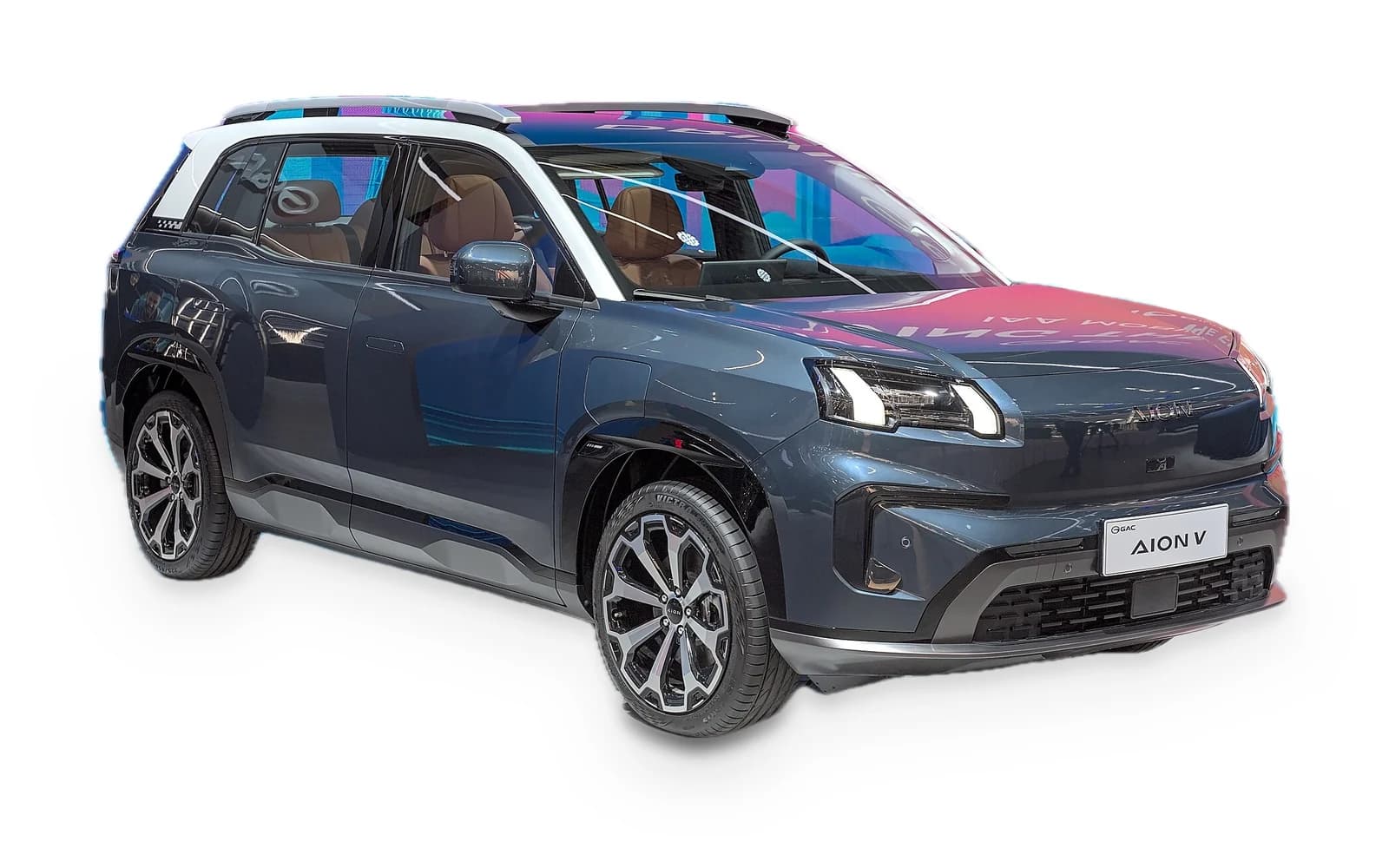
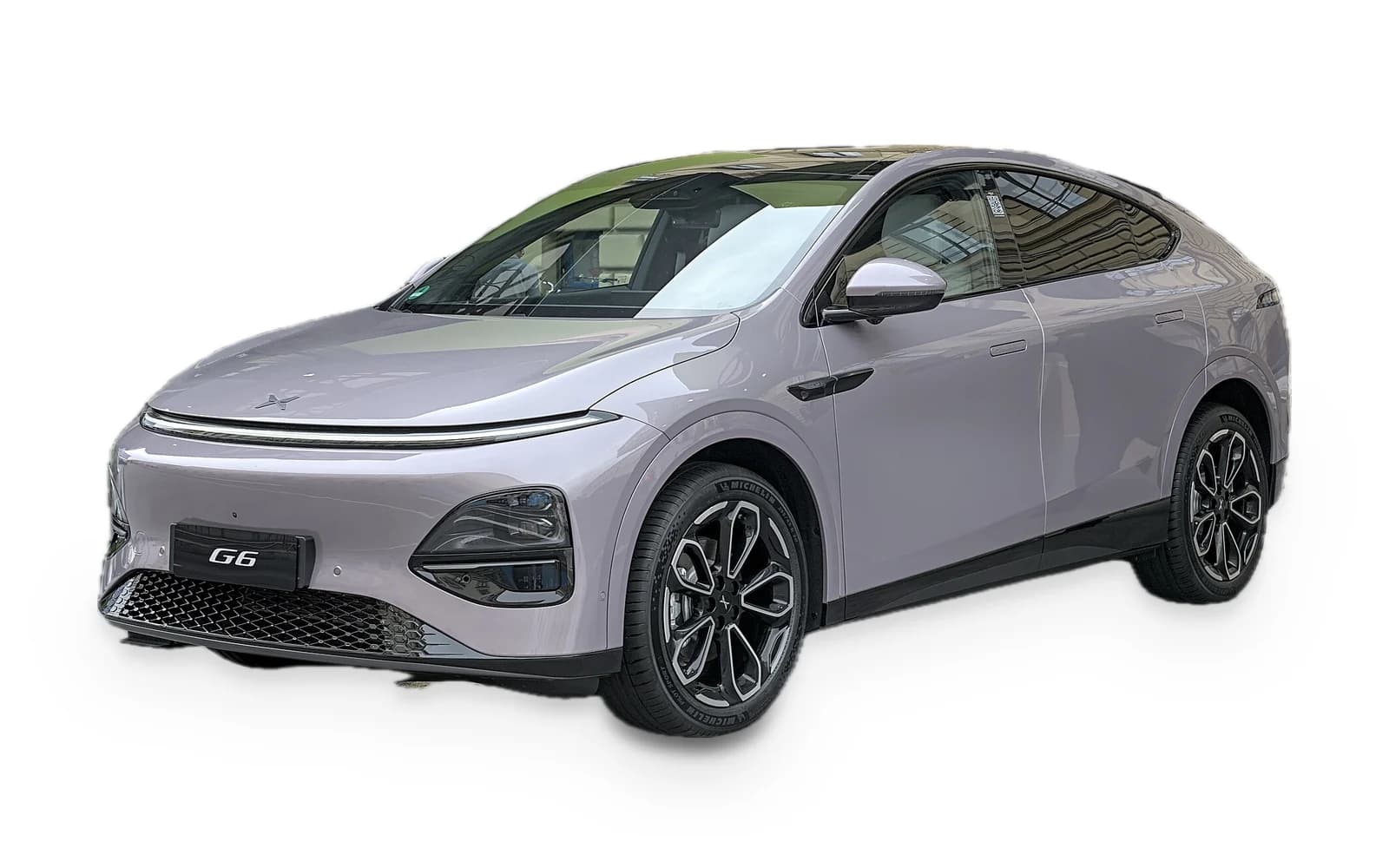
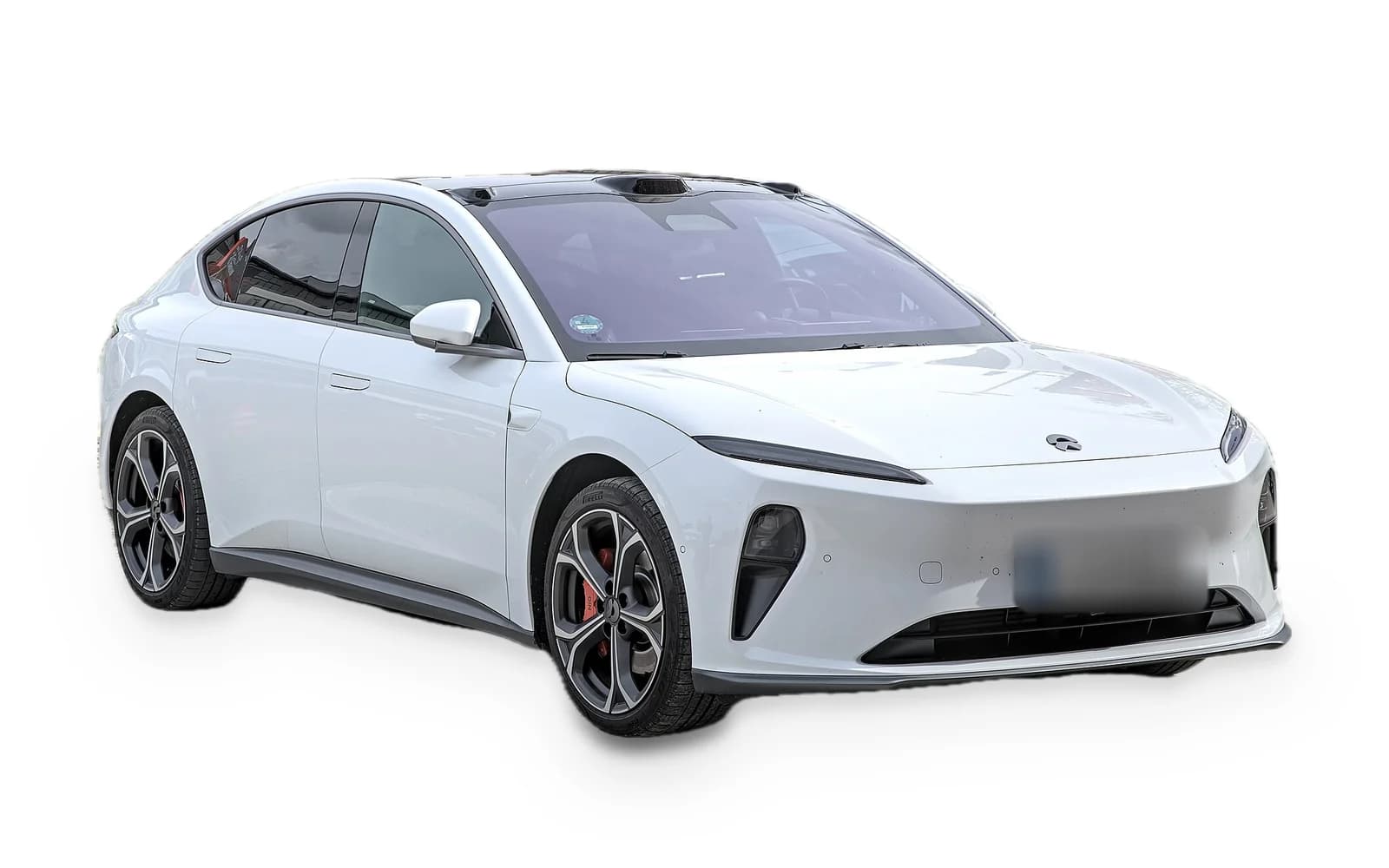
Models to ask about
China guide prices, not delivered prices.
Type: Battery-electric
China guide price from: ¥109,800
Type: Battery-electric
China guide price from: ¥176,800
Type: Battery-electric
China guide price from: ¥298,000
| Model | Type | China guide price from |
|---|---|---|
| Aion V | Battery-electric | ¥109,800 |
| XPeng G6 | Battery-electric | ¥176,800 |
| NIO ET5 | Battery-electric | ¥298,000 |
A model on this list is not a promise of supply. Send your city, model and version through the inquiry form. We tell you whether we can supply that car before any contract.
How an order works
- Ask a Chilean customs broker (agente de aduanas) who will import the car, and which homologation route fits your region and volume.
- Check the model year, so the car still counts as new on the day the declaration is accepted.
- Get a quote from the licensed Chinese export company named in the contract. Ask about the certificate of origin, plug type, adapter and travel cable.
- Sign the contract. Nothing is paid before it is signed, and payment goes only to the company account on the invoice.
- Your broker clears the car. Then get the CHI-e, register at the Registro Civil and get the circulation permit.
Häufige Fragen
Can I import a used Chinese electric car into Chile?
How much duty does a Chinese electric car pay?
Do electric cars pay the green tax?
Can a private person import a new car?
Is a GB/T car usable in Chile?
Fahrzeuge für den Einstieg
Möchten Sie eines dieser Fahrzeuge in Ihr Land verschiffen lassen?
Nennen Sie uns Ihr Land und die Version; wir antworten innerhalb eines Werktags mit einem FOB-Richtpreis und dem Exportweg.
Sources (checked 2026-10-30)
- Law 18.483, version 2019-11-11
- Aduanas: returning Chileans, with Q15 and Q16, 2022
- Aduanas: traveller FAQ, with Q17
- Aduanas: vehicle exemptions, 2021
- Aduanas: import FAQ
- Aduanas: how to import, 2020
- China-Chile FTA, text, OAS SICE copy
- China-Chile FTA, Annex 1, OAS SICE copy
- Chile tariff schedule under the FTA, OAS SICE copy
- Aduanas tariff, Section XVII, 2019 edition
- DL 825, version 2026-02-05
- Law 21.420, version 2024-11-01
- Law 20.780, version 2026-02-05
- SII: green tax
- ChileAtiende 7: model homologation, updated 2026-02-19
- ChileAtiende 3961: individual homologation, updated 2026-02-19
- ChileAtiende 3388: first registration, updated 2026-04-01
- DS 160/1997, version 2026-06-18
- DS 145/2017, version 2024-06-08
- Diario Oficial 2023-01-04: change to DS 26
- Diario Oficial 2025-05-27: change to DS 2/2017
- Diario Oficial 2025-09-29: DS 19/2025
- DS 41/2019
- Law 18.290, version 2026-10-22
- Law 21.505
- SII Resolution 6/2026
- Aduanas Exempt Resolution 2902/2011
- SEC RIC 15, 2024, read through a web archive copy
- Chócale: SERNAC report, 2026-09-25, press
- Mundo Marítimo: BYD Changzhou, 2026-08-12, press
- DP World: BYD shipment, 2026-09-10, operator's release
- DP World: ACSA 1 service, operator's release
- Welltrans and Sino-Shipping, forwarder pages
Dieser Leitfaden ist keine Rechts- oder Zollberatung; maßgeblich sind der Zoll des Ziellandes und ein zugelassener Zollagent.